
Architectural Gas Torches: The Complete Specification and Buying Guide
Sep 24, 2026
Outdoor fire belongs elevated. Yet finding clean, vertical fixtures that move past rustic lanterns or traditional tiki styling remains surprisingly difficult. Most designers and property owners appreciate the movement of open flame, but they often run into a shortage of modern profiles along with confusing mechanical requirements. This is where architectural gas torches step in, shifting fire from a casual patio accessory into a deliberate, structural focal point.
Getting the installation right requires looking past surface aesthetics. Between fuel line sizing, inlet pressure requirements under codes like NFPA 54, and secure structural mounting, the engineering behind the burner dictates how reliably the flame performs in an open outdoor environment. In this guide, you will discover how to evaluate, specify, and integrate permanent architectural gas torches into exterior walls, posts, and modern landscapes. We examine the functional differences between mounting configurations, natural gas versus propane demands, and the essential specification criteria to review before breaking ground.
Key Takeaways
- Learn how architectural gas torches establish visual height and vertical rhythm along exterior walls, terraces, and open landscape perimeters.
- Evaluate the practical differences between wall-mounted, post-mounted, and freestanding configurations to match your project's structural framing.
- Understand how supply pressure, orifice sizing, and burner geometry govern flame performance across both natural gas and liquid propane systems.
- Identify critical planning considerations, from solid substrate backing to clearance zones, required before coordinating with licensed mechanical trades.
- Discover how engineered airflow and durable materials turn vertical gas flames into lasting architectural focal points.
What Defines an Architectural Gas Torch in Modern Outdoor Design?
Fire provides scale. While conventional low-voltage fixtures illuminate flat surfaces, vertical fire introduces visual height and rhythm along stone retaining walls, structural columns, and expansive terraces. Modern architectural gas torches serve as permanent, plumbed elements integrated directly into the built environment. Rather than functioning as seasonal accessories, these systems tie into hard-piped natural gas or dedicated liquid propane lines, establishing deliberate focal points that define structural boundaries after dark.
Historically, exterior combustible lighting focused solely on utilitarian illumination. As engineering evolved beyond standard gas lighting networks, the role of outdoor flame transformed. Today's architectural fixtures treat the flame itself as a structural element, anchoring sightlines and bridging the visual transition between interior living areas and exterior spaces.
The Distinction Between Decorative Accents and Architectural Fire
Many landscape accents are designed as seasonal or portable pieces: easy to move, easy to store. Architectural fire features are a different commitment. They call for permanent mechanical planning, rigid framing, and heavy-duty fabrication. The distinction centers on structural permanence and materials:
- Heavy-duty construction: Aluminum housings and structural brackets built for long-term outdoor exposure.
- Architectural sightlines: Deliberate vertical geometry frames outdoor thresholds, pool perimeters, and masonry piers.
- Engineered containment: Protective enclosures shield the combustion zone while shaping the visual profile of the flame.
The structure provides the form. The flame provides the show.
Controlled Airflow and the Dynamics of Vortex Fire
Standard open-flame torches expose their fuel source directly to ambient air, leaving the flame free to wander. Architectural gas torches use the fixture housing to guide air past the burner, creating a consistent chimney effect that feeds combustion evenly.
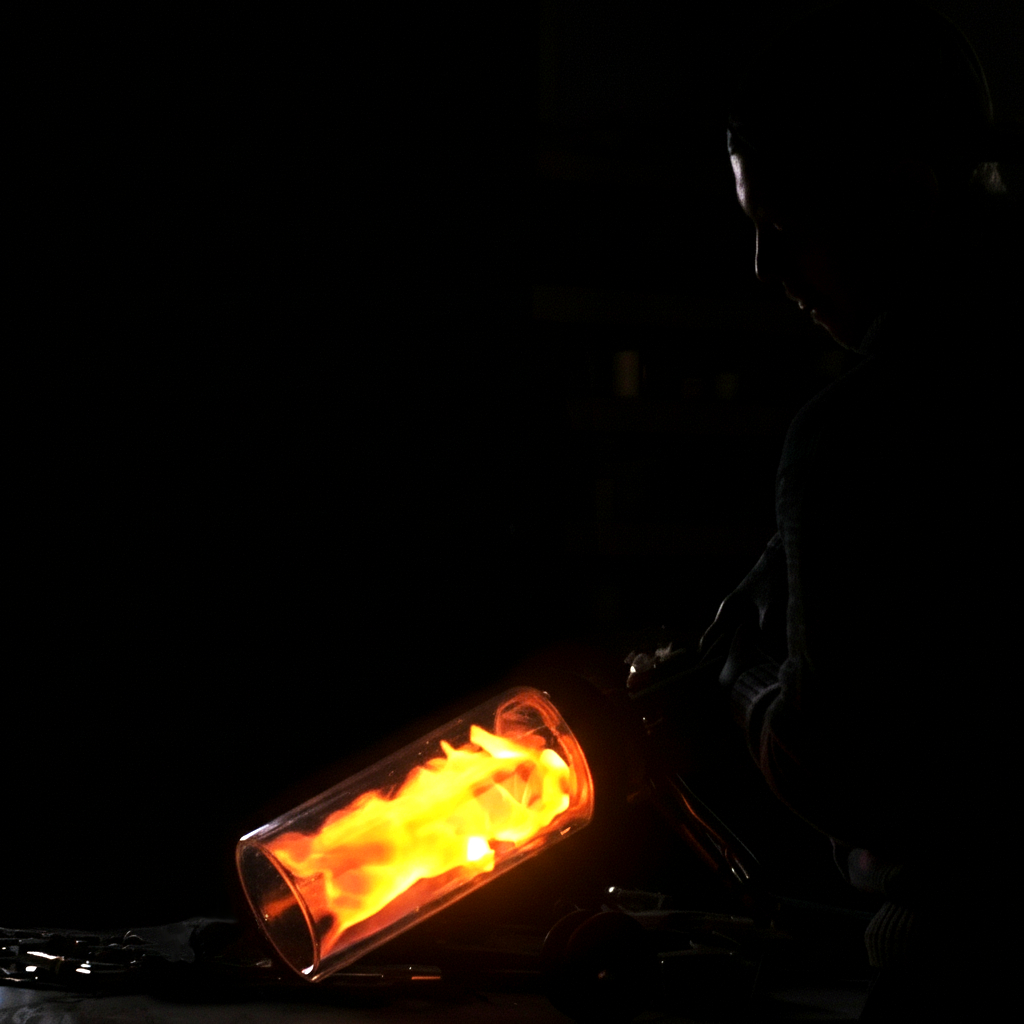
In specialized designs, this guided airflow generates a defined vortex. Directed air causes the flame to spin upward, pulling the fire into an upright spiral that increases its visual height. Where the design uses a tempered glass enclosure, the glass helps stabilize combustion air and protect the vortex from ambient air movement.
Key Criteria for Evaluating Architectural Gas Torches
Specifying architectural gas torches requires balancing visual scale with structural and mechanical realities. The fixture must complement the surrounding architecture during daylight while delivering controlled flame dynamics at night. Evaluating mounting geometry, material durability, and fuel delivery before finalizing drawings ensures clean site integration.
Mounting Styles: Wall-Mounted, Post-Mounted, and Column Formats
Mounting choice dictates how a fire feature interacts with hardscape surfaces:
- Wall-mounted torches: Fastened to exterior structural walls, stone veneer, or masonry columns. They accentuate entry thresholds and flank courtyard boundaries without consuming patio deck space.
- Post-mounted fixtures: Elevated on dedicated posts or grade-level pedestals to define pathways, terrace steps, and pool perimeters. Review the definitive guide to fire torch design for functional layouts across multi-level outdoor spaces.
- Freestanding towers and columns: Self-supporting vertical features designed to anchor open gathering zones where permanent structural walls are absent.
Scale matters. A slender post fixture can disappear against a two-story stone facade, while an oversized wall torch can overwhelm a narrow entryway.
Material Selection and Enclosure Engineering
Outdoor fire features endure continuous weathering punctuated by repeated heating and cooling. Heavy-duty aluminum components resist corrosion while providing the structural rigidity needed to hold alignment over time. Alloy selection depends on product engineering, finish quality, and environmental exposure.
In enclosed designs, tempered glass panels shield the combustion zone and help guide upward airflow. Glass surfaces retain significant heat during operation. While enclosures shape flame presentation, protective glass never replaces direct adult supervision around active fire features.
Ignition Systems and User Operation
Ignition systems determine daily convenience. Push-button battery-operated electronic ignition allows quick starts without open matches. Manual-light valves, by contrast, offer mechanical simplicity with fewer electrical parts to service over time. Confirm which ignition type a specific model uses before finalizing your specification.
Regardless of mechanism, accessible gas shutoff valves are essential for routine operation and seasonal maintenance. All fuel piping, shutoffs, and regulators must comply with product guidelines and the National Fuel Gas Code. Explore HaloFire's natural gas and propane configurations to compare options for your project.
Fuel Dynamics and Infrastructure: Natural Gas vs. Liquid Propane
A gas flame reflects the plumbing behind it. While many assume that liquid propane inherently produces a taller or brighter flame than natural gas, fuel chemistry alone does not dictate appearance. Burner geometry, orifice diameter, regulator capacity, and delivered pressure combine to establish the visual character of architectural gas torches. Both fuel types can deliver substantial, visually striking flames when the mechanical infrastructure is accurately calibrated.
Combustion Calibration and Orifice Engineering
Natural gas and liquid propane have distinct physical properties that require dedicated burner hardware. Liquid propane carries significantly more energy per cubic foot than natural gas, so it requires a smaller orifice and higher delivery pressure to burn cleanly.
- Natural Gas (NG): Appliances are commonly calibrated for approximately 3.5 inches Water Column (in W.C.) manifold pressure.
- Liquid Propane (LP): Appliances are commonly calibrated for approximately 11 inches W.C. manifold pressure, using an orifice with a smaller physical diameter.
Precision matters. Never attempt field conversions by drilling orifices or swapping fittings unless the manufacturer explicitly approves that exact model for conversion. Never introduce torch oils, bioethanol, or other liquid fuels into a plumbed gas appliance. Doing so ruins the burner and creates dangerous combustion hazards.
Piping Runs, Supply Sizing, and Regulator Planning
Pressure drop starves torches. When specifying multiple architectural gas torches along a terrace or pool edge, the total pipe length from the meter or LP tank directly affects volume delivery. Longer runs and multiple fixtures increase total demand and pressure loss, which often means larger supply lines than a single fixture near the structure would need.
Dedicated upstream regulators help maintain steady inlet pressure when other outdoor appliances come on. Licensed plumbing and mechanical professionals must calculate total fixture load, pipe sizing, and equivalent lengths before trenching begins.
Permanent Gas Lines vs. Self-Contained Propane Solutions
Infrastructure availability often shapes the product choice. Permanent natural gas lines or hard-piped bulk propane offer hands-off convenience, eliminating the need to monitor fuel levels during gatherings. For remote courtyards or finished concrete patios where trenching is cost-prohibitive, self-contained fixtures provide another route. Designs like the Torrent™ Stand-Alone show how a concealed 20-pound propane cylinder can deliver architectural-scale vortex fire without sub-grade pipe installation.
Placement Planning, Structural Substrates, and Installation Safety
Real flame generates real heat. Because architectural gas torches project fire upward, their integration requires careful physical positioning. Successful installations treat structural backing, thermal clearances, and trade coordination as unified requirements rather than separate tasks.
Architectural Sightlines, Clearances, and Mounting Substrates
Mounting height establishes how the fixture interacts with outdoor living spaces. Placing torches where the base of the flame sits just above seated eye level keeps sightlines open across terraces while delivering visual presence from adjacent indoor rooms. When planning vertical placement, substrate preparation comes first:
- Masonry and poured concrete: Solid stone, brick, or concrete walls offer excellent structural anchoring and non-combustible mounting surfaces.
- Framed construction and veneers: Where the product's installation manual permits it, installations over stucco, wood siding, or manufactured stone veneer require solid blocking tied directly into wall studs to resist wind load leverage.
- Clearance boundaries: Follow the manufacturer-specified clearances for the exact fixture model, accounting for heat rise beneath roof overhangs, arbors, and lateral wall projections.
Every real-flame fixture creates a heat envelope. Follow the specific product installation instructions for exact dimensions rather than relying on generic estimates.
Professional Trade Coordination and Code Adherence
Architectural installations require clear handoffs between project disciplines. HaloFire designs and fabricates the fire features; it does not run gas lines or mount hardware on job sites. Coordination between the landscape architect, general contractor, and licensed gas fitter is vital before rough framing closes up.
Plumbing trades must pull appropriate permits, size supply lines correctly, and verify working pressure at the rough-in connection. Plan for an accessible manual shutoff valve for each fixture as required by code and the product instructions. Deciding its location early keeps access straightforward without marring finished wall surfaces.
Environmental Factors and Coastal Exterior Care
Outdoor exposure tests exterior surfaces continuously. Salt-laden air in coastal settings deposits mineral layers that can pit metal and haze glass over time. No exterior fixture is maintenance-free. A regular care routine helps preserve surface finishes and optical clarity: rinse metal housings with clean freshwater and wipe down glass panels. For product specifications and installation documentation, contact HaloFire.
HaloFire Architectural Gas Torches: Choosing the Right Model
Fire becomes structural when the engineering serves the architecture. HaloFire develops architectural gas torches around vertical flame geometry, pairing heavy-duty fabrication with deliberate airflow design. Whether anchoring a stone masonry pier or marking an open perimeter, the right configuration depends on mounting surfaces, gas routing, and visual scale.
Torrent™ Wall Mounted Gas Torches for Structural Surfaces
Torrent™ Wall Mounted torches secure directly to exterior facades, courtyard walls, and masonry columns. Built with heavy-duty aluminum and tempered glass, they house an upward-spiraling vortex flame, with battery-operated electronic ignition. Available in natural gas or propane configurations, in three nominal glass heights to match adjacent structural scale:
- 24-inch profile: Suited to compact flanking locations, low courtyard walls, and intimate entryways.
- 32-inch profile: A balanced vertical height for standard exterior walls and residential columns.
- 48-inch profile: Built for taller facades and expansive residential or commercial terraces.
Tall Torches and Post Mounts: Tempo™, Hollywood™, and Vortek™ NG/LP
For perimeter lighting and grade-level hardscapes, vertical post fixtures define walkways and exterior transitions without requiring adjacent structural walls:
- Tempo™ Tall Torch: Stands approximately 75 inches tall and delivers approximately 25,000 BTU/hr, in natural gas or propane configurations.
- Hollywood™ Tall Torch: A tall architectural profile especially suited to planned new-construction gas rough-ins.
- Vortek™ NG/LP Gas Torch: A post-mounted vortex torch rated at approximately 11,000 BTU/hr, with published pressures of 3.5 in W.C. on natural gas and 11 in W.C. on propane. Manual-light.
While permanent post fixtures anchor defined boundaries, projects with reconfigurable seating areas can pair them with HaloFire portable fire features for design continuity across the whole space.
Torrent Tower™ and Torrent™ Stand-Alone Formats
Both bring vertical vortex fire into open gathering areas where no structural wall exists: one plumbed, one self-contained. The Torrent Tower™ is a permanent-install feature, approximately 56 inches tall with an 18-inch square cap, available in natural gas or propane configurations.
Where trenching a gas line across a finished patio is impractical, the approximately 78-inch Torrent™ Stand-Alone conceals a standard 20-pound propane cylinder within its base. It delivers approximately 40,000 BTU/hr of vertical flame movement, with no hard-piped infrastructure required. Contact HaloFire for full product specifications.
Bringing Engineered Vertical Fire to Your Exterior Design
Integrating fire into outdoor architecture means looking past standard decorative fixtures. High-performance vertical installations rely on deliberate engineering: internal airflow design for controlled vortex movement, paired with heavy-duty construction built for outdoor exposure.
Whether you're running natural gas to a courtyard wall or planning a self-contained propane feature for an open terrace, address supply pressure, pipe sizing, and structural framing early to avoid complications during installation. A well-engineered vertical fixture provides a clean focal point while keeping the sightlines of your built environment open.
Ready to align your drawings with the right fixture? Explore HaloFire architectural gas torches and request specifications to plan your next exterior installation with confidence.
Frequently Asked Questions
Can architectural gas torches be installed on wood-framed exterior walls?
It depends on the specific fixture. Where the product's installation manual permits it, wood-framed walls require solid blocking between studs to secure the bracket against wind leverage. The installation must maintain manufacturer-specified clearances from combustible materials, trim, and roof soffits. Always follow the product installation manual and local building codes for any stand-off or thermal barrier requirements.
Is natural gas better than liquid propane for powering outdoor gas torches?
Neither fuel is inherently better. Both produce substantial flames when paired with properly calibrated burner equipment. Natural gas typically operates at lower manifold pressure (around 3.5 in W.C.) and connects to a utility supply for continuous use without tank refills. Liquid propane typically operates at higher manifold pressure (around 11 in W.C.) and offers flexibility where no gas line is available, using bulk tanks or cylinders. Visual performance depends on burner design, orifice sizing, and delivery pressure rather than fuel type alone.
Can I burn liquid torch fuel or citronella oil inside a gas torch?
No. Never put liquid fuel into a natural gas or propane torch. Poured fuels such as citronella oil, bioethanol, or torch blends are made only for liquid-fuel torches designed to use them. Adding liquids to a gas appliance fouls valves, blocks fuel ports, and creates a serious fire hazard. Gas torches must operate only on the gas type indicated on the product's rating plate.
How do outdoor gas torches maintain flame stability in open air?
Architectural gas torches use the fixture housing to guide air past the burner. This creates a chimney effect that feeds combustion evenly and shapes the flame's vertical movement. In HaloFire vortex designs, that directed airflow is what spins the flame upward.
Does HaloFire provide on-site gas line plumbing and installation?
No. HaloFire designs and sells fire features but does not provide on-site gas plumbing or installation services. All permanent gas piping, regulator placement, pressure verification, and final connections must be completed by a licensed gas fitter or qualified mechanical contractor, following the product manual and local fuel gas codes.
Are outdoor architectural gas torches safe to run overnight or unattended?
No real-flame fire feature should ever be left operating unattended or overnight. Gas torches have active combustion zones and surfaces that get hot during use. An adult should monitor the flame during operation and fully shut off the gas supply when the gathering ends. Treat outdoor gas features with the same care you'd give any gas appliance.