

Outdoor Gas Lanterns: A Guide to Architectural Fire and Atmosphere
Sep 20, 2026
LED lighting is a utility. Fire is an experience. Most high-end landscapes fail because they prioritize mere visibility over architectural soul. You've likely noticed how generic exterior bulbs cast a cold, clinical glare that flattens your home's character. It feels hollow. It lacks the gravitas your estate deserves. Integrating premium outdoor gas lanterns isn't just a lighting upgrade; it's an investment in elemental power. These features command attention, drawing the eye with a living, breathing flame that modern bulbs cannot replicate.
We understand the hesitation. Resolving the technical divide between natural gas and propane or fearing a style that might feel dated in five years can stall any design vision. This guide bridges that gap. You'll discover how to master the intersection of raw elements and modern luxury to create a cinematic nightscape. We'll detail the engineering behind a maintenance-free fire experience and show you how to select timeless fixtures that increase property value. From fuel requirements to aesthetic curation, your journey toward a more refined outdoor lifestyle begins here.
Key Takeaways
- Learn how the psychological power of live fire and the specific choice between natural gas and propane define the visual soul of your estate.
- Discover how to select outdoor gas lanterns that harmonize with your home's architectural bones, moving beyond generic lighting to create a permanent sense of heritage.
- Master the art of cinematic layering to define boundaries and pathways, transforming a dark landscape into a curated nightscape.
- Explore the evolution of fire features, including how proprietary engineering like Torrent Tower technology creates a mesmerizing tornado-like flame.
- Understand the technical nuances of fuel density and safety standards to ensure your high-end fire experience is both breathtaking and maintenance-free.
The Allure of Outdoor Gas Lanterns: Defining Architectural Atmosphere
Fire is the ultimate architect. It transforms a static structure into a living experience, commanding attention through movement and warmth. Unlike traditional fixtures, outdoor gas lanterns are permanent architectural instruments that utilize controlled, live fire to anchor a home's exterior design. They provide more than mere visibility. They provide presence. By integrating these features, you're not just adding light; you're curating a centerpiece experience that speaks to the primal connection between human comfort and the natural elements.
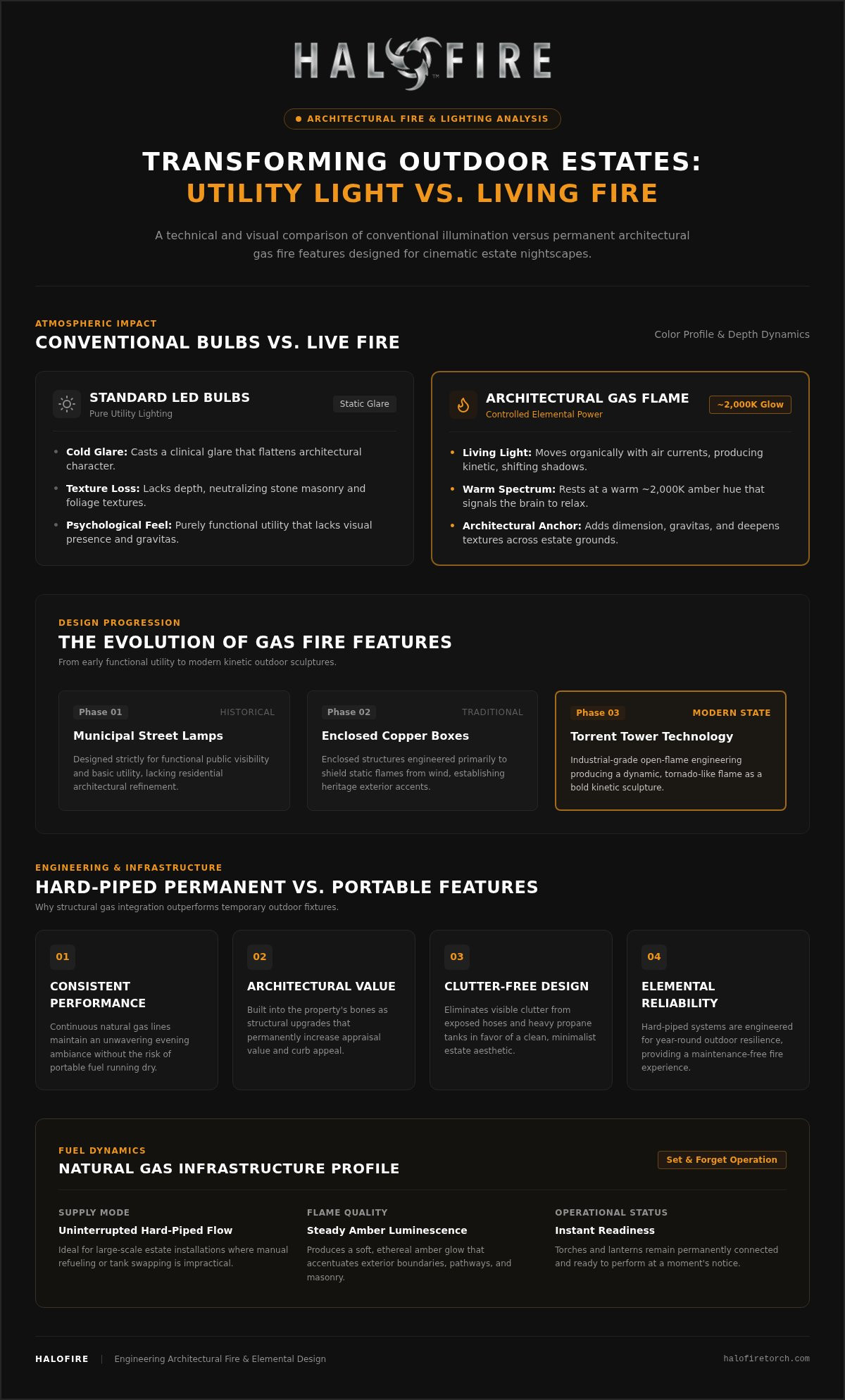
The psychological impact of a flickering flame is profound. It's a primal comfort. The soft, amber glow of a gas-powered flame, typically resting at a warm 2,000K color temperature, signals the brain to relax while heightening the visual drama of the surrounding architecture. While LED bulbs offer a flat, clinical glare that flattens textures, fire produces a "living" light. It moves with the air. It creates shifting shadows that add depth to masonry and foliage. This organic motion ensures that your estate feels vibrant and welcoming, even in the deepest hours of the night.
The Evolution of Outdoor Fire Features
The history of gas lighting traces a path from purely functional municipal street lamps to today's sculptural icons. We've moved far beyond the era of simple utility. Early lanterns were often enclosed copper boxes designed to protect the flame from the wind; modern iterations have evolved into bold, open-flame statements. This evolution is best seen in industrial-grade features like the Torrent Tower. These modern designs prioritize "elemental awe," often utilizing Torrent Tower technology to create a mesmerizing, tornado-like flame that acts as a kinetic sculpture for your landscape.
Why Permanent Gas Features Outperform Portable Options
Sophistication requires seamless integration. Portable fire pits or temporary torches often introduce visual clutter through exposed hoses and heavy propane tanks that must be swapped or hidden. Permanent gas features solve this through refined engineering. By utilizing hard-piped fuel lines, these outdoor gas lanterns offer a maintenance-free experience that is always ready. They're built into the property's "bones," providing several key advantages for the modern estate:
- Consistent Performance: Natural gas lines provide a steady fuel supply for an unwavering evening ambiance without the fear of a tank running dry.
- Architectural Value: Permanent fixtures are considered structural upgrades that increase a home's appraisal value and curb appeal.
- Clutter-Free Design: Eliminating portable fuel sources allows for a clean, minimalist aesthetic that keeps the focus on the architecture.
- Elemental Reliability: Hard-piped systems are designed for year-round use, standing up to the elements while maintaining a high-end fire experience.
Choosing a permanent installation is a commitment to quality. It's the difference between a temporary accessory and a lasting legacy of light. These features don't just sit on your property; they define it.
Performance and Fuel: Natural Gas vs. Propane Solutions
Fuel is the lifeblood of the flame. It dictates the height, the hue, and the very spirit of your architectural installation. Selecting between natural gas and propane isn't merely a logistical hurdle; it's a design decision that influences the cinematic layering of your estate's nightscape. Each fuel source offers distinct performance characteristics that must align with your property's infrastructure to achieve a truly high-end fire experience. Whether you're seeking the steady glow of traditional outdoor gas lanterns or the roaring intensity of a modern fire torch, the fuel you choose is the foundation of that elemental awe.
Natural Gas: The Permanent Statement
Natural gas is the bedrock of permanent architectural fire. It offers an uninterrupted fuel supply that allows for "set and forget" evening lighting, which is vital for large-scale estates where manual refueling is impractical. This continuous flow ensures your torches and lanterns are always ready to perform at a moment's notice. In high-performance fixtures, natural gas produces a steady, reliable flame with a soft, ethereal amber quality. It's the standard for permanent architectural fire.
Propane: Flexibility Without Compromise
Propane delivers raw elemental power. For remote landscape features or perimeter boundaries where hard-piped lines aren't feasible, propane provides a high-performance solution. It's about energy density. Understanding the energy density and fuel characteristics of propane is key to appreciating its visual impact. Because propane contains roughly 2.5 times the heat density per volume compared to natural gas, it often yields a more robust, intensely orange flame. This makes it the preferred choice for custom fire features designed to command attention from a distance or serve as a dramatic focal point in open spaces.
Specialized Torch Fuels: Citronella and Paraffin
Atmosphere often demands functional precision. When the goal shifts from broad architectural lighting to intimate comfort, specialized liquid fuels provide a tailored solution. Citronella fuel is an essential tool for maintaining a bug-free, luxury outdoor environment. It allows you to preserve the evening's tranquility without the intrusion of pests. Paraffin oil serves a different purpose. It's a clean-burning, refined fuel that produces a bright, steady flame with virtually no soot or smoke. This makes it the ideal choice for intimate seating areas or features placed near light-colored architectural finishes and delicate outdoor fabrics.
Mastering the flame begins with the fuel. Whether you prioritize the permanence of natural gas or the raw intensity of propane, your choice must support your artistic vision. If you're curating a space that demands high-impact fire, reviewing our precision-engineered natural gas and propane torches will help you bridge the gap between design and elemental power.
Architectural Styles: From Traditional Copper to Industrial Fire Torches
Style is a language. Choosing outdoor gas lanterns requires an understanding of your home's "bones", the structural rhythm that dictates whether a fixture feels like a natural extension or a forced addition. Luxury landscapes currently favor three distinct directions: the heritage of traditional copper, the refined grit of industrial steel, and the minimalist power of the modern fire torch. Each material carries a different visual weight. Copper suggests legacy. Steel implies evolution. Glass provides a window into the flame, though it often acts as a barrier to the raw heat that defines a high-end fire experience.
The Classic Copper Aesthetic
Traditional box lanterns remain the hallmark of Colonial, Mediterranean, and French Quarter architecture. These fixtures rely on 16 to 32 ounce solid American milled copper and hand-riveted craftsmanship to establish a sense of permanence. They utilize the natural patina process, where the metal evolves from a deep chocolate brown to a distinguished verdigris green over several years. This organic transition integrates perfectly with lush, established landscapes. However, traditional glass-enclosed boxes have limitations. They can feel fragile in high-wind environments, and the glass requires frequent maintenance to remain clear of carbon residue. For estates seeking a more rugged, open presence, the evolution toward industrial metalwork is inevitable.
Industrial Elegance and Modern Fire Torches
Modern estates demand a shift from "lighting a house" to "shaping the night." Sleek metal torches and stand-alone fire features have replaced the static box in contemporary design. Industrial designs like the Helion Go bridge the gap between portable versatility and permanent performance. These features focus on the flame itself, treating fire as a kinetic sculpture rather than a hidden utility. This approach aligns with the Five Principles for Responsible Outdoor Lighting by prioritizing warm color temperatures and minimizing unnecessary glare through thoughtful, downward-focused placement. It's about the elemental look, where the fixture disappears to let the fire speak.
Stand-Alone Fire Icons
The pinnacle of fire design is the stand-alone icon. Defining the Torrent Tower as a centerpiece redefined how we view architectural fire. These massive features are designed to anchor grand residential courtyards or high-end commercial entries where a standard wall-mount fixture would be lost. Achieving a towering flame presence requires sophisticated engineering to ensure stability and fuel efficiency. It's a bold declaration of luxury. While traditional outdoor gas lanterns serve as sophisticated accents, these towers act as the architectural heartbeat of the entire property, commanding respect through their sheer scale and elemental power.
Designing Your Nightscape: Placement and Layering for Impact
Light is a director. Cinematic layering is the secret to a high-end estate. It's about depth. Most homeowners make the mistake of over-lighting, which washes out the mystery and flattens the architecture. Outdoor gas lanterns should be the stars of your nightscape, not the stagehands. By treating fire as a primary design element, you can define the narrative of your landscape, guiding the eye through a sequence of visual reveals that feel both deliberate and organic.
Defining the Entryway and Perimeters
The entryway is your first impression. It sets the tone for the entire property. Use paired gas lanterns to create a formal sense of arrival, utilizing symmetry to establish a mood of grounded luxury. This isn't just about visibility; it's about authority. Perimeter lighting serves a different purpose. By placing torches along the outer edges of your property, you push back the darkness and extend the visual boundaries of your estate. Scale is critical here. A small lantern on a massive stone pillar looks like an afterthought. You must choose fixtures that match the architectural volume and "weight" of your home's structural elements.
Creating Intimate Focal Points
Social zones need a heart. You can use a fire torch to draw guests toward specific social zones, creating a natural gathering point that feels both dramatic and deeply comforting. This is the art of "fire-scaping." It involves integrating living flames into the existing textures of stone, water, and greenery. Consider the verticality of your design. Layer your light heights to create a rich, three-dimensional environment. Wall mounts provide eye-level warmth, while post-mounts offer structural rhythm. Incorporating ground-level features creates a foundation of light that anchors the entire scene.
Rhythm is essential for a sophisticated flow. Space your torches carefully to avoid a "runway" effect. You want a pulse of light that invites exploration, not a continuous strip that dictates a path. The final challenge is balancing these fire features with existing electrical lighting. Fire provides the atmosphere; low-voltage LEDs provide the safety. Hide your electric sources in the foliage or under eaves. Let the fire take the credit for the glow. If you're ready to master your property's atmosphere, explore our collection of high-end fire features to begin your design.
Elevating the Standard: Why Fire Torches Redefine the Gas Lantern
Traditional outdoor gas lanterns served a noble purpose. They were the quiet sentinels of the evening, providing a soft glow to the edges of the night. But luxury design has evolved. We're no longer content with a static flame trapped behind a glass box. Modern fire torches represent the next stage of this evolution, stripping away the ornamental clutter to focus on the raw, primal power of the element itself. This shift from "lighting" to "centerpiece experience" is what defines a truly modern estate. It's about movement. It's about power. It's about the transition from mere utility to elemental awe.
The Power of the Torrent Tower
A standard wall lantern provides a glow. A stand-alone fire tower provides a presence. The visual impact of a feature like the Torrent Tower is immediate and undeniable. It's an architectural icon that commands respect from every angle. This isn't fire by accident; it's fire by design. By utilizing Torrent Tower technology, we sculpt the flame into a mesmerizing, tornado-like spiral. This proprietary engineering creates maximum drama, turning a simple fuel source into a kinetic sculpture that breathes life into the landscape. Whether you utilize natural gas for its permanence or propane for its raw intensity, the result is a towering flame presence that traditional fixtures simply cannot replicate.
Custom Fire Design for Unique Estates
Refined living isn't found in a catalog. It's built into the blueprints. Moving beyond off-the-shelf solutions is essential for a bespoke outdoor space that reflects your personal vision. The process of tailoring fire features to specific architectural requirements ensures that the scale, material, and flame profile harmonize with your home's unique character. We prioritize durability by using marine-grade steel and thick, tempered glass designed to withstand the most demanding environments. These materials ensure that your investment remains as striking as the day it was installed. This isn't a temporary accessory. It's a lasting legacy of light and heat.
Fire is the heartbeat of a refined lifestyle. It's the difference between a house and an estate. It's an invitation to pause, to wonder, and to connect with the primal forces of nature in a sophisticated setting. If you're ready to transcend the ordinary and redefine your property's atmosphere, discover the Halofire collection of premium torches and towers and bring the power of architectural fire to your landscape.
Mastering the Night: Your Legacy of Light
The night is a canvas. Your choice of outdoor gas lanterns determines whether your estate remains in the shadows or emerges as a masterpiece of architectural fire. We've explored how the strategic layering of flames and the deliberate selection of fuel sources can redefine your property's soul. It's a transition from basic utility to a centerpiece experience that commands respect. This evolution from traditional boxes to modern fire torches ensures your landscape remains timeless and powerful.
Our mission is to help you master this atmosphere. By redefining the architecture of elemental fire, we provide more than just fixtures; we offer a permanent connection to nature's most powerful force. Whether you require custom design services for a bespoke estate or wish to harness our proprietary high-impact flame technology, the path to a refined outdoor lifestyle is clear. The engineering of awe is within your reach.
It's time to claim your nightscape. We invite you to Elevate Your Estate with the Torrent Tower and experience the awe of a truly sculpted flame. Your vision deserves a legacy of light that never fades. Step into the glow of a more sophisticated tomorrow.
Expert Guidance for Architectural Fire
Are outdoor gas lanterns safe to leave on overnight?
Yes, it's a standard practice for luxury estates to maintain a perpetual glow. Modern engineering ensures these fixtures are designed for continuous, safe operation. Many premium systems incorporate electronic ignition with safety sensors that detect if a flame is extinguished. You should always ensure your lanterns meet ANSI Z21.97 standards for outdoor decorative appliances. This gives you total confidence in your property's safety throughout the night.
Can gas lanterns still burn in the rain or high winds?
Premium fire features are built to withstand the elements. Architectural torches undergo rigorous testing to endure rain and steady wind gusts up to 31 mph without losing their flame. Features like the Torrent Tower utilize specialized glass and aerodynamic draft tubes to protect the fire's integrity. If a severe storm does extinguish the flame, modern electronic systems will attempt to relight automatically or execute a total safety gas shut-off.
How much maintenance do outdoor gas lanterns require?
Maintenance is minimal but essential for preserving visual clarity. You'll need to clean the tempered glass quarterly to remove carbon film, dust, and insect residue attracted by the warmth. It's a simple process of wiping the panes with a soft cloth and mild cleaner. Periodically inspect the burner tips for obstructions to ensure the outdoor gas lanterns maintain their signature flame shape and consistent performance year after year.
Do I need a professional to install my natural gas outdoor lanterns?
Yes, you must hire a licensed professional for all gas line connections. While Halofire provides high-end torches and accessories, we don't offer on-site gas installation services. A certified plumber or gas technician ensures your lines meet NFPA 54 codes and local safety regulations. Proper professional integration is the only way to guarantee the long-term safety and performance of your architectural fire features and your home's infrastructure.
What is the difference between an open-flame lantern and a mantle lantern?
It's a choice between atmosphere and utility. Open-flame lanterns produce a natural, flickering "bat-wing" flame designed for visual drama and amber warmth. Mantle lanterns use a fabric mesh to produce a bright, steady white light similar to a bulb. For a luxury estate, the open flame is the preferred choice. It prioritizes the elemental movement and character that define a truly cinematic and awe-inspiring outdoor nightscape.
Can I convert my existing electric lanterns to gas?
Conversion is rarely feasible or safe. Electric fixtures aren't designed to handle the intense heat or the venting requirements of a live flame. Attempting a conversion often leads to damaged finishes or hazardous gas accumulation within the fixture. It's better to invest in purpose-built outdoor gas lanterns designed for the specific thermal demands of natural gas or propane. This ensures both architectural beauty and total structural integrity.
How long does a standard propane tank last for an outdoor torch?
Runtime depends entirely on the BTU output of your specific torch. A single 20 lb propane tank typically provides 20 to 24 hours of continuous operation for a torch rated at 20,000 BTUs. High-performance features like the Helion Go are designed for efficiency, but larger sculptural towers will consume fuel faster. For permanent installations, hard-piping a larger propane source or natural gas line is often the more sophisticated solution.
Are gas lanterns more expensive to operate than LED lighting?
Fire is a premium experience, not a cost-saving measure. Operating a gas lantern typically costs between $5 and $25 per month depending on fuel type and usage hours. While LED lighting is cheaper to run, it cannot replicate the soul or the psychological warmth of a living flame. You're investing in an atmosphere that increases property value and creates a centerpiece experience that modern bulbs simply cannot touch.

